
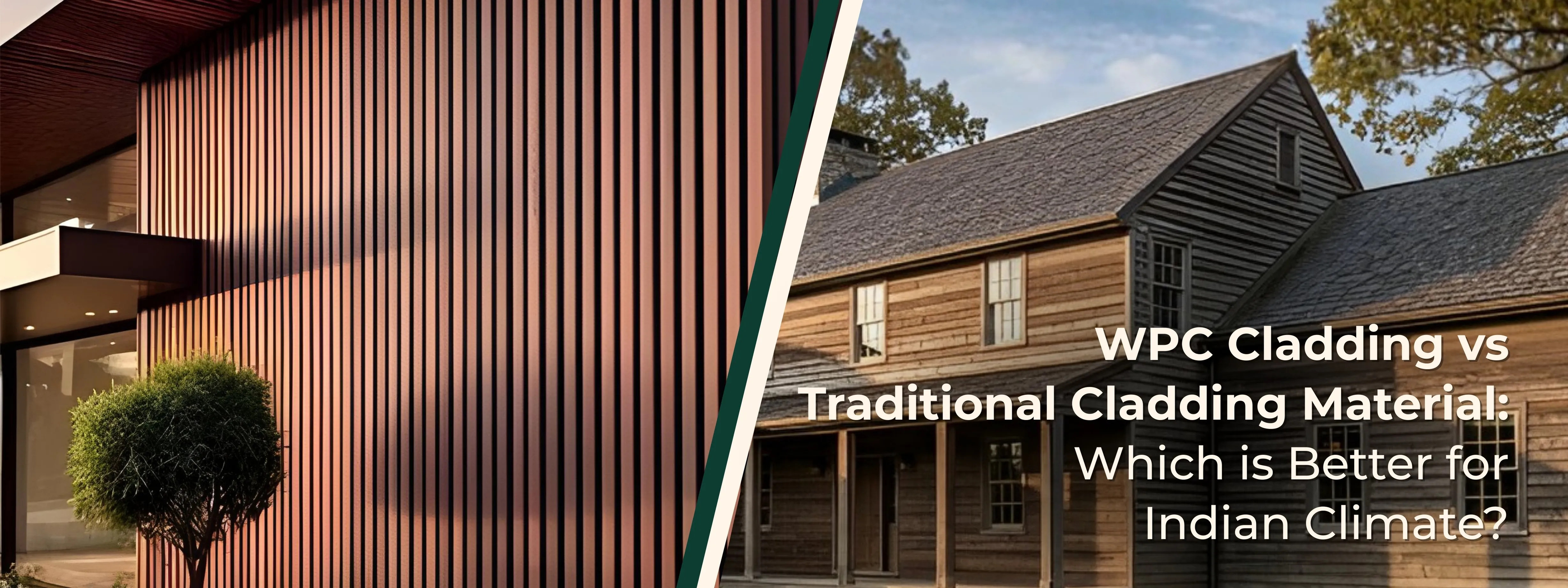
WPC Cladding vs Traditional Cladding Materials: Which Is Better for the Indian Climate?
Choosing the right wall cladding material is a critical decision for homes and commercial buildings in India. With extreme summers, high humidity, heavy monsoons, and corrosive coastal air, Indian weather puts exterior surfaces under constant stress. Among the many options available today, WPC (Wood Plastic Composite) cladding and traditional cladding materials such as natural wood, HPL, fibre cement boards, PVC, aluminium composite panels (ACP), and stone veneers remain the most commonly used.
But which option truly performs better in Indian conditions?
This detailed comparison explains the durability, maintenance, cost, and climate performance of WPC cladding versus conventional wall cladding materials—helping you make a confident, long-term choice.
What Is WPC Cladding?
WPC cladding is a modern facade cladding solution manufactured using a blend of wood fibres and recycled polymers. It offers the warmth and appearance of natural wood while delivering the durability of engineered composites.
Because of its weather-resistant properties, WPC cladding is widely used for building facades, balconies, exterior walls, villas, commercial complexes, and hospitality projects across India.
Key Features of WPC Cladding
- Highly weatherproof and UV-stabilised
- Moisture-resistant and waterproof
- 100% termite and rot resistant
- Low-maintenance exterior solution
- Eco-friendly and recyclable material
- Ideal for hot, humid, and coastal regions
What Are Traditional Cladding Materials?
Traditional cladding material refer to commonly used external wall cladding systems that have been in use for decades. In India, these include:
- Natural wood cladding
- HPL (High Pressure Laminate) panels
- Fibre cement boards
- PVC cladding
- Aluminium composite panels (ACP)
- Stone or brick veneer cladding
Each of these conventional cladding systems has different strengths and limitations depending on installation quality, exposure, and climate conditions.
WPC Cladding vs Traditional Cladding Materials: Comparison Table
|
Feature |
WPC Cladding |
Conventional Wall Cladding |
|
Weather Resistance |
Excellent |
Moderate to good (material-dependent) |
|
Monsoon Performance |
Waterproof |
Wood & HPL may swell |
|
Heat Resistance |
High |
ACP heats up, PVC may warp |
|
Maintenance |
Very low |
Medium to high |
|
Termite & Rot Resistance |
100% resistant |
Wood & cement boards vulnerable |
|
Lifespan |
20–25 years |
5–15 years (varies) |
|
Long-Term Cost |
Cost-effective |
Higher due to upkeep |
|
Eco-Friendliness |
High |
Depends on material |
|
Design Options |
Wood textures & modern finishes |
Wide variety by material |
Performance Comparison in Indian Climate Conditions
India’s climate varies significantly across regions, scorching heat in the north and central zones, prolonged monsoons in the west and east, high humidity in the south, and saline air in coastal areas. Here’s how both facade materials perform under these conditions.
1. Heat & UV Resistance
WPC Cladding is engineered to tolerate high temperatures without cracking, warping, or excessive fading. Its UV-protected surface retains colour even in cities like Delhi, Jaipur, Nagpur, and Ahmedabad, where summer temperatures often exceed 45°C.
Traditional Cladding Materials
- Natural wood fades, cracks, and dries under harsh sunlight
- ACP panels become extremely hot and are prone to dents
- HPL performs better but may fade gradually over time
Winner: WPC Cladding
2. Monsoon & Moisture Resistance
WPC Cladding, WPC does not absorb moisture, making it highly suitable for regions with extended monsoons such as Maharashtra, Kerala, West Bengal, Odisha, and the Northeast.
Conventional Wall Cladding
- Wood swells and rots when exposed to moisture
- Poorly installed HPL may delaminate
- Fibre cement boards absorb water and may crack
Winner: WPC Cladding
3. Termite & Fungal Resistance
Termite infestation and fungal growth are major concerns in humid and coastal regions of India.
WPC Cladding
- Completely termite-proof
- No risk of rot, mould, or fungal decay
Traditional Cladding Materials
- Wood and PVC are most vulnerable
- Cement boards offer limited resistance but are not termite-proof
Winner: WPC Cladding
4. Maintenance Requirements
WPC CladdingRequires only occasional water cleaning. No painting, polishing, varnishing, or sealing is required throughout its life cycle.
Conventional Cladding Systems
- Wood requires polishing or varnishing every year
- HPL needs regular inspection for edge damage
- Cement boards require repainting over time
Winner: WPC Cladding
5. Lifespan & cost Efficiency
WPC cladding typically lasts 20–25 years with minimal maintenance. While the initial cost may be similar to premium cladding options, its long-term value is significantly higher.
Average lifespan of traditional facade materials:
- Natural wood: 5–7 years
- Fibre cement boards: 8–10 years
- HPL panels: 10–15 years
Winner: WPC Cladding (more cost-effective over time)
Which Cladding Is Best for the Indian Climate?
If your priority is durability, weather resistance, low maintenance, and long-term performance, WPC cladding clearly outperforms most traditional wall cladding materials across Indian climate zones.
Choose WPC Cladding If:
- You live in a hot, humid, or coastal region
- Your building receives direct sunlight or heavy rainfall
- You want a natural wood appearance without maintenance issues
- You are looking for a long-lasting, maintenance-free facade solution
Traditional Cladding Materials May Suit If:
- You need a specific aesthetic such as stone or metal finish
- The project is small with strict budget limitations
Frequently Asked Questions
1. Is WPC cladding suitable for Indian weather conditions?
Yes. WPC cladding is specifically designed to handle extreme heat, heavy rainfall, humidity, and coastal environments.
2. Does WPC cladding fade in strong sunlight?
High-quality WPC with UV stabilisation resists fading even under prolonged sun exposure.
3. Is WPC cladding more expensive than conventional cladding?
The initial cost is comparable, but WPC becomes more economical over time due to negligible maintenance.
4. Can WPC cladding be used in coastal areas?
Yes. WPC is resistant to salt air, moisture, and corrosion, making it ideal for coastal construction.
5. What is the lifespan of WPC cladding?
On average, WPC cladding lasts between 20 and 25 years, depending on product quality and installation.
Conclusion
For Indian climate conditions, where extreme heat, humidity, monsoon rains, termites, and long-term maintenance costs are major concerns, WPC cladding stands out as the most reliable, durable, and cost-efficient facade material. It combines modern aesthetics with high performance and has become a preferred choice for architects, builders, and homeowners across India.
If you are planning to upgrade your exterior with high-quality WPC solutions, Luxewood India, a trusted WPC manufacturer in India, offers premium cladding products engineered specifically for harsh Indian weather conditions. Their solutions deliver superior durability, elegant design, and long-term value.
Explore Luxewood India’s WPC range or request a quote today.