
Thermo-Treated Louvers: Combining Aesthetics and Ventilation in Modern Gulf Architecture
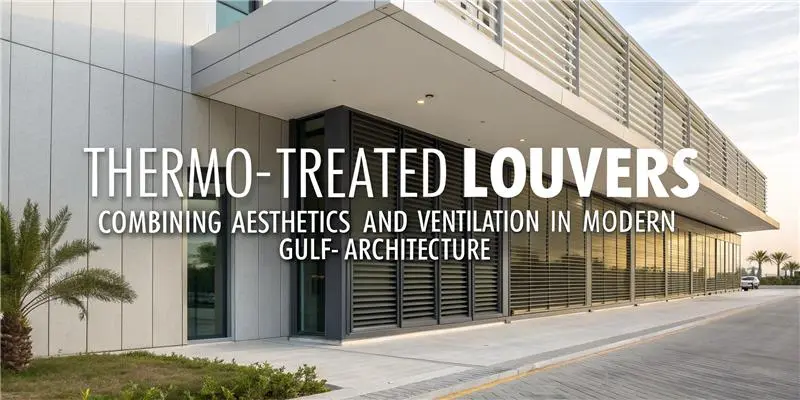
In the architectural landscape of the Gulf, designers and developers face a unique challenge—how to build structures that withstand the region’s intense heat, remain energy-efficient, and yet reflect modern elegance. Enter thermo-treated wooden louvers—a sustainable, stylish, and practical solution that is fast becoming the choice for facade design, shading, and passive cooling in contemporary buildings.
By combining natural textures with enhanced durability, thermo-treated louvers provide a bridge between form and function, allowing architects to craft beautiful exteriors that serve a vital environmental purpose.
Thermo-Treated Louvers: Form Meets Function in Gulf Architecture
Louvers have long played a critical role in architecture—both as visual features and climate control tools. What sets thermo-treated louvers apart is the treatment process itself. Thermo-treatment involves heating wood to high temperatures in a controlled, oxygen-free environment. This process modifies the structure of the wood, making it dimensionally stable, resistant to moisture, and exceptionally durable.
In Gulf climates, where solar radiation is intense and temperatures often exceed 45°C, traditional wood would warp, crack, or discolor. Thermo-treated louvers, however, are engineered to maintain their shape and tone, providing architects with a reliable facade element that looks good and performs even better.
Explore our full Natwood product range for facade solutions tailored for the Gulf.
Passive Cooling and Natural Ventilation in Building Design
Beyond their striking appearance, louvers offer functional advantages that make them key to passive cooling strategies. Properly placed louver systems help:
- Reduce heat gain by shading windows and facades
- Allow cross ventilation and air circulation
- Minimize reliance on mechanical HVAC systems
By incorporating thermo-treated wooden louvers, buildings benefit from both thermal comfort and energy savings, which aligns perfectly with sustainability goals in modern Middle Eastern construction. With growing awareness of green building practices and the push for LEED certification across the UAE, Qatar, and Saudi Arabia, these architectural elements have never been more relevant.
Learn how Natwood products support green design in our blog on eco-conscious interiors.
High-End Finishes with Long-Lasting Structural Integrity
Louvers are not just for utility—they’re a design feature. Thermo-treated wood has a rich, organic finish that brings a warm, natural aesthetic to facades. With no need for paints or chemicals, the louvers naturally age into an elegant silver-grey over time—or can be treated with UV protectants to preserve their golden-brown hue.
Architects favor these louvers not just for their looks but for their resistance to warping, pests, rot, and fading, especially when compared to untreated wood or low-quality composite alternatives. Natwood’s louvers are also low-maintenance, requiring only periodic cleaning—making them ideal for large-scale commercial properties and villas where upkeep is a concern.
Natwood’s louvers are also low-maintenance, requiring only periodic cleaning—making them ideal for large-scale commercial properties and villas where upkeep is a concern.
Design Applications: Corporate Facades, Hotels, and Villas
Thermo-treated louvers are being used across a wide variety of projects:
- Corporate headquarters and commercial towers for a clean, modern look with solar shading
- Luxury hotels and resorts that prioritize both sustainability and standout aesthetics
- Private villas and residential clusters where privacy, cooling, and façade elegance intersect
From vertical fins and horizontal slats to custom-curved installations, louvers are a versatile design element that enhances the architectural value of both new builds and retrofits. For additional ideas, browse our louvers and cladding installations across iconic Middle Eastern projects.
For additional ideas, browse our louvers and cladding installations across iconic Middle Eastern projects.
Customization Options for Architects Seeking Design Freedom
At Natwood, we understand that no two projects are alike. Our thermo-treated louvers are available in various profiles, widths, and finishes—giving architects the freedom to:
- Control light and shadow play on the facade
- Match design themes from minimalist to ornate
- Adapt to specific ventilation needs or sun orientation
Our expert technical team supports architects from specification to execution, ensuring seamless integration with building envelopes and complete compliance with local regulations. Want to collaborate with us on your next facade project? Reach out via our contact page.
Want to collaborate with us on your next facade project? Reach out via our contact page.
Conclusion
In the Gulf’s evolving architectural scene, thermo-treated wooden louvers are more than just a trend—they’re a smart, sustainable, and stunning solution to contemporary design challenges. Offering the perfect union of aesthetics and performance, they’re redefining the skyline of the region one facade at a time.
Whether you're working on a boutique villa or a skyline-defining commercial property, choose Natwood’s thermo-treated louvers to create bold designs that are built to last.
Explore our louver systems now on LuxewoodIndia.co.in.