
Facade Trends in Bangalore (2026): The Shift Toward Smarter, Performance-Driven Design
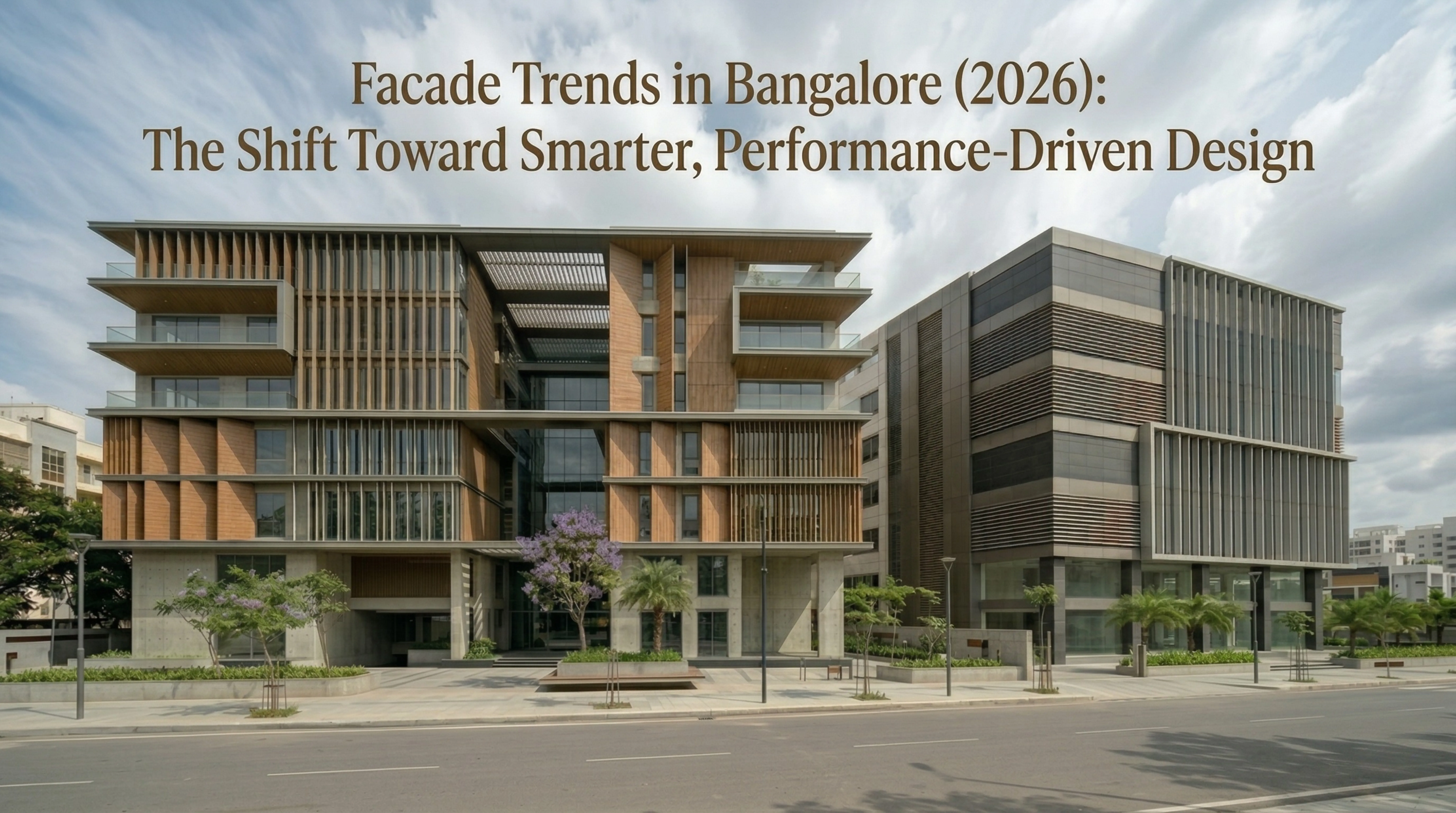
The Evolution of Facade Design in Bangalore
Bangalore’s built environment is undergoing a visible transformation. From commercial hubs in Whitefield to evolving residential zones along Sarjapur Road, facades are no longer treated as static exteriors.
In 2026, they are being designed as performance-driven systems, balancing climate response, durability, and visual identity.
This shift is gradually redefining how facade design is approached, moving beyond material selection toward integrated thinking and technical planning, an approach increasingly shaped by specialized facade expertise.
Why Facades in Bangalore Are Becoming More Complex
Designing for Bangalore comes with a unique set of environmental and execution challenges:
- High solar exposure across most of the year
- Heavy monsoon cycles
- Dust and pollution affecting exterior finishes
- Increasing demand for low-maintenance buildings
As a result, facade design is no longer just about choosing a material. It now involves:
- Understanding environmental impact
- Ensuring long-term performance
- Aligning design with execution feasibility
This growing complexity is shaping the latest facade trends across the city, and reinforcing the need for a more consultative, system-driven approach to facade development.
Key Facade Trends in Bangalore for 2026
-
Climate-Responsive Aluminium Facades
One of the most visible shifts is the adoption of aluminium-based facade systems.
These systems are being preferred for their ability to:
- Adapt to changing weather conditions
- Maintain structural and visual stability over time
- Support layered and functional facade designs
Their versatility allows for both minimal and highly expressive architectural outcomes, supported by precise system planning and execution.
-
Layered & Depth-Driven Elevations
Flat glass surfaces are gradually being replaced by multi-dimensional facades that introduce depth and texture.
This includes:
- Linear design patterns
- Vertical and horizontal elements
- Shadow-responsive surfaces
Such approaches not only enhance visual identity but also contribute to better light control and facade performance, when backed by the right technical detailing.
-
The Rise of Wood-Finish Aluminium
Natural materials continue to influence design language, but their performance in Bangalore’s climate remains a concern.
Wood, while aesthetically appealing, often faces:
- Moisture-related issues
- Fading due to UV exposure
- Ongoing maintenance challenges
This has led to the growing use of wood-finish aluminium systems, which offer:
- A natural appearance
- Improved resistance to weather conditions
- Greater long-term consistency
These systems are increasingly being used across:
- Residential facades
- Entrance features
- Ceilings and semi-open spaces
where achieving both aesthetic intent and durability requires careful material selection and finish consistency.
-
Preference for Low-Maintenance Facade Materials
With rising lifecycle awareness, there is a noticeable shift toward materials that:
- Retain their finish over time
- Require minimal upkeep
- Perform reliably in outdoor conditions
Aluminium aligns well with these expectations, making it a practical choice for both residential and commercial developments, especially when supported by long-term performance assurance.
-
Integration of Sustainability in Facade Design
Sustainability is becoming a defining factor in material and system selection.
Facade strategies now consider:
- Energy efficiency
- Material recyclability
- Reduction in long-term environmental impact
Aluminium supports these goals due to its recyclability and durability, contributing to more sustainable building envelopes when used as part of a well-planned facade system.
The Emerging Role of Technical Facade Planning
As facade systems evolve, there is a growing emphasis on technical coordination and planning.
Rather than treating the facade as a standalone layer, it is now approached as a system that requires:
- Alignment between design and execution
- Material compatibility
- Detailed development before installation
This shift is gradually introducing a more consultative approach to facade development, where design intent and on-site realities are closely aligned through informed decision-making.
A More Integrated Approach to Facade Development
In response to these changing requirements, facade solutions are increasingly being developed through collaborative and system-driven processes, an approach followed by Luxewood India, where facade development is treated as a coordinated design and execution process.
This approach typically involves:
- Early-stage design input
- Material and system alignment
- Technical detailing and refinement
- Execution-level coordination
Such a process helps ensure that what is envisioned during design is effectively carried through to the built structure, maintaining both performance and visual integrity.
Supporting Modern Facade Requirements
To meet these evolving expectations, newer aluminium systems are being designed to combine:
- Aesthetic flexibility
- Structural reliability
- Long-term performance
Solutions like MetaSkin by Luxewood India reflect this direction, offering wood-finish aluminium applications suitable for both exterior and interior use, while maintaining durability and finish consistency over time.
With extended performance assurance of up to 35 years, such systems align with the increasing focus on lifecycle value and dependable facade outcomes.
Conclusion: The Future of Facades in Bangalore
Facade design in Bangalore is moving toward a more informed, performance-oriented, and system-driven approach.
What was once a material decision is now a multi-layered process involving design, engineering, and execution alignment.
As expectations from buildings continue to rise, the facade will play an even more critical role, not just in defining how structures look, but in how they perform over time.
Explore Facade Possibilities for Your Next Project
For projects that demand a balance of design flexibility, durability, and long-term performance, exploring advanced aluminium facade solutions can open new possibilities.
Learn how Luxewood India’s MetaSkin systems can support modern facade requirements in Bangalore through a more integrated and technically aligned approach.