
Complete Guide to Aluminium Facade Panels in India [2026]
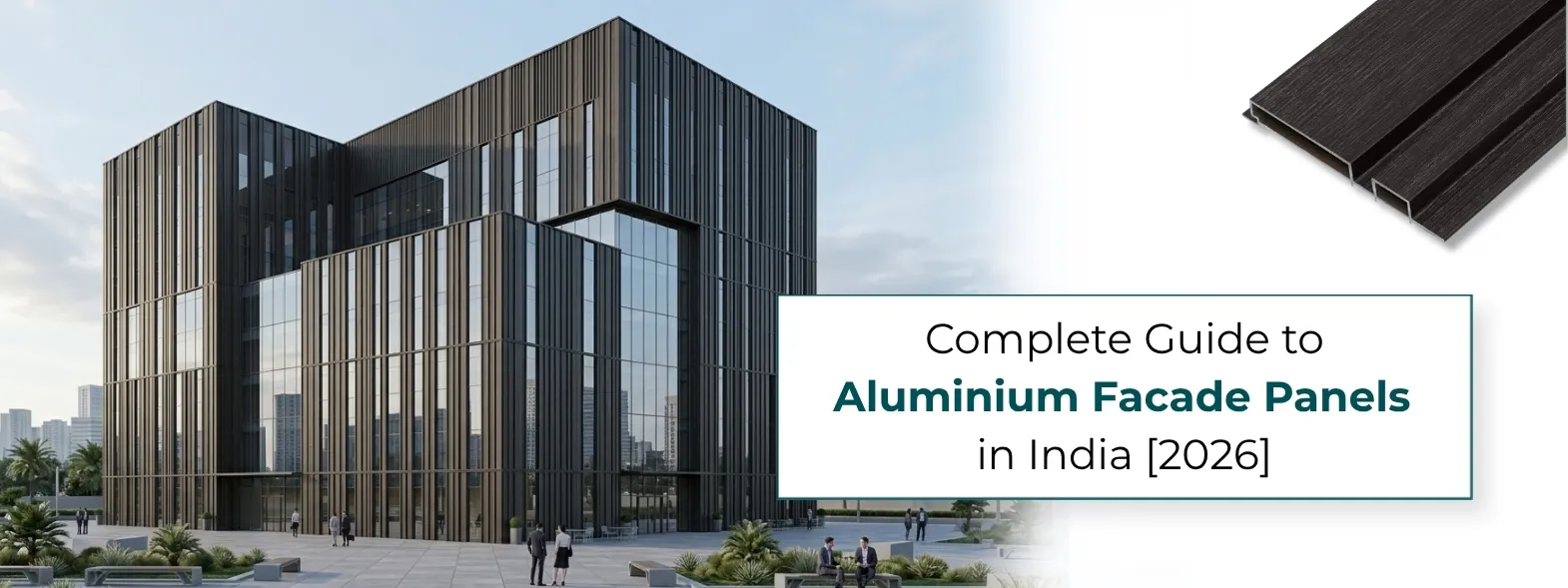
India’s architectural landscape is no longer defined just by scale, but by the intelligence of its building envelopes. Today, a significant share of new commercial developments is integrating aluminium facade panels, positioning them as a critical element in contemporary design.
Across cities like Mumbai, Bengaluru, and Ahmedabad, aluminium panels for facades are enabling architects to achieve precision in form, material consistency, and long-term performance. Their adaptability makes them particularly relevant in projects that demand both visual impact and climatic resilience.
Designing for India, however, is complex. High UV exposure, monsoon intensity, airborne pollutants, and coastal corrosion all place stress on façade systems. As a result, architects are increasingly moving beyond basic cladding materials toward engineered facade systems that can perform reliably over decades.
This shift is where solutions like Metaskin by Luxewood India become relevant. Rather than being treated as individual panels, Metaskin functions as a complete façade system, enabling better detailing, improved weather performance, and a more refined architectural language.
What Are Aluminium Facade Panels?
Aluminium facade panels are engineered exterior cladding systems that form the outer skin of a building. They serve both protective and expressive roles, contributing to environmental performance while shaping the building’s identity.
System Composition
Most aluminium facade panels are composed of:
- Aluminium alloy sheets for durability and corrosion resistance
- A core layer for structural stability or fire performance
- High-performance coatings such as PVDF for UV and weather protection
In advanced applications, these panels are part of a ventilated façade system, allowing airflow between the cladding and the structure, reducing heat gain and moisture buildup.
Architectural Function
From an architectural standpoint, aluminium panels allow:
- Clean, modular façade articulation
- Reduced structural load due to lightweight properties
- Faster execution with prefabricated elements
- Greater control over detailing and finish
As facade design evolves, the shift is clearly toward system-based solutions rather than standalone materials.
Types of Aluminium Facade Panels in India
Different project requirements call for different panel systems, each offering a unique balance between performance, cost, and design flexibility.
Aluminium Composite Panels (ACP)
ACP remains one of the most widely used options due to its affordability and ease of installation. It works well for low-rise buildings and interior applications but may require careful specification in high-rise or fire-sensitive environments.
Solid Aluminium Panels
Solid aluminium panels provide a higher level of structural integrity and fire resistance. These are often preferred in premium or high-risk environments, such as coastal regions or high-rise towers.
Perforated Aluminium Panels
Perforated panels introduce an additional layer of architectural expression. They allow architects to explore light, shadow, and ventilation, making them suitable for screen façades and dynamic elevations.
Integrated Facade Systems (Metaskin)
Increasingly, projects are moving toward fully integrated façade systems.
Metaskin enables:
- Pre-engineered panel modules
- Consistent joint detailing
- Enhanced weather sealing
- Design flexibility for complex geometries
For architects, this means fewer compromises between concept and execution.
Key Benefits of Aluminium Facade Panels
Aluminium façade systems are preferred not just for aesthetics, but for their performance-driven advantages.
Climate Performance
They resist UV exposure, heavy rainfall, and pollutants, making them suitable for diverse Indian climates. Systems like Metaskin enhance this further with engineered sealing strategies.
Structural Efficiency
Their lightweight nature reduces load on the building structure, allowing more efficient design.
Design Freedom
From minimal flat façades to complex parametric forms, aluminium supports a wide design spectrum. Integrated systems further expand this capability.
Energy Efficiency
Ventilated facades help reduce heat gain, contributing to better thermal performance and lower energy consumption.
Durability
With proper specification and installation, aluminium facades can maintain performance and appearance for decades.
Maintenance Advantage
Compared to traditional materials, aluminium requires significantly less upkeep, especially in high-rise applications.
Applications Across Building Typologies
Aluminium facade panels are highly versatile and adaptable across sectors.
Commercial Buildings
Office towers and IT parks rely on aluminium facades to express modernity and corporate identity. Integrated systems like Metaskin are increasingly used in high-visibility developments.
Residential Projects
Luxury apartments and villas benefit from aluminium’s clean, contemporary finish and low maintenance.
Retail & Hospitality
For malls, hotels, and showrooms, façade design plays a critical role in branding—aluminium enables bold and consistent visual expression.
Institutional & Infrastructure
Hospitals, campuses, and transport hubs demand materials that are durable, compliant, and efficient, making aluminium a practical choice.
Installation Process & Best Practices
The performance of a facade system is directly influenced by installation quality.
Pre-Installation
Includes structural assessment, detailed measurements, and preparation of shop drawings.
Substructure Setup
A supporting framework is installed, ensuring alignment and accommodating thermal movement.
Panel Installation
Panels are fixed using systems such as cassettes or interlocking methods, allowing precision and flexibility.
Sealing & Finishing
Joint sealing, drainage detailing, and final alignment checks ensure long-term performance.
System-Based Installation
Integrated systems like Metaskin follow specialized installation protocols, ensuring:
- Precision alignment
- Controlled tolerances
- Verified performance
This reduces on-site variability and improves reliability.
Cost Considerations for Aluminium Facade Panels in India
Instead of viewing façade systems purely through initial cost, architects and developers increasingly evaluate them based on lifecycle value.
Entry-level aluminium composite panels are typically chosen for budget-sensitive projects where cost efficiency is a priority. As performance requirements increase, such as fire safety, durability, or exposure to harsh environments, projects tend to move toward higher-grade ACP or solid aluminium systems.
At the premium end, integrated systems like Metaskin represent a different category altogether. Rather than being a simple material selection, they involve engineering, fabrication, installation, and long-term performance assurance as part of a single system.
This distinction is important.
While the upfront investment for such systems is higher, they often result in:
- Lower maintenance requirements over time
- Greater consistency in performance
- Reduced risk of failure or rework
- Enhanced asset value for the building
For architects working on landmark or long-term ownership projects, the decision often shifts from cost minimization to performance optimization.
How to Choose the Right Facade System
Selecting the right façade system requires balancing design intent, environmental conditions, and long-term performance goals.
Understand the Context
Coastal environments demand corrosion resistance, while high-rise projects require strict fire compliance.
Align with Design Intent
Minimalist designs may favor clean solid panels, while expressive façades may incorporate perforation or custom forms.
Evaluate Performance Needs
Thermal efficiency, maintenance access, and durability should guide specification.
Choose the Right Partner
Experience, certification, and installation capability are just as important as the material itself.
When to Consider Metaskin
Metaskin becomes relevant when:
- The project is design-intensive
- Environmental conditions are demanding
- Long-term performance is critical
- Maintenance access is limited
Maintenance & Lifecycle Performance
Aluminium facades are relatively low maintenance, but proper care ensures longevity.
Routine cleaning using mild solutions helps maintain finish quality. Periodic inspection of joints, sealants, and drainage systems prevents long-term issues.
Systems like Metaskin are designed to further reduce maintenance effort through:
- Improved sealing
- Better surface resistance
- Long-lasting coatings
This ensures consistent performance and appearance over time.
Conclusion: Designing Beyond Cladding
Aluminium facade panels are no longer just an exterior finish, they are an integral part of how buildings perform, age, and communicate design intent.
For architects, the opportunity lies in leveraging these systems not just for efficiency, but for precision, expression, and reliability.
Integrated solutions like Metaskin represent the next step in this evolution, bridging the gap between design ambition and execution certainty.
Because in contemporary architecture, a façade is not just what you see, it’s how the building performs over time.
FAQs
What is the difference between ACP and solid aluminium facade panels?
ACP panels are lightweight sandwich panels with a core, making them cost-effective for general use. Solid aluminium panels are fully metal, offering higher strength, better fire resistance, and greater durability. They are preferred for high-rise, coastal, and safety-critical architectural applications.
Are aluminium facade panels suitable for Indian climate conditions?
Yes, aluminium facade panels are highly suitable for Indian climates. They resist heat, heavy rainfall, humidity, and pollution. Advanced systems like Metaskin further enhance durability through improved sealing, corrosion resistance, and long-term performance in both inland and coastal environments.
How long do aluminium facade panels last?
Aluminium facade panels typically last 25–30 years with proper installation and maintenance. High-performance coatings help retain color and finish. Integrated systems like Metaskin extend lifespan further by reducing maintenance needs and ensuring consistent performance in challenging environmental conditions.
What factors should architects consider when selecting facade panels?
Architects should consider building type, height, environmental exposure, fire safety, and design intent. Thermal performance, maintenance access, and installation quality are also critical. For complex or high-performance projects, integrated systems provide better execution, durability, and long-term reliability.
Why choose an integrated facade system likeMetaskin?
Metaskin offers a complete facade system combining engineered panels, substructure, and installation. This ensures precision, reduces on-site errors, and improves weather resistance. It is ideal for high-visibility and performance-driven projects where design accuracy and long-term durability are essential.