
Aluminium Facade Cladding Systems: The Ultimate Guide for Architects & Builders
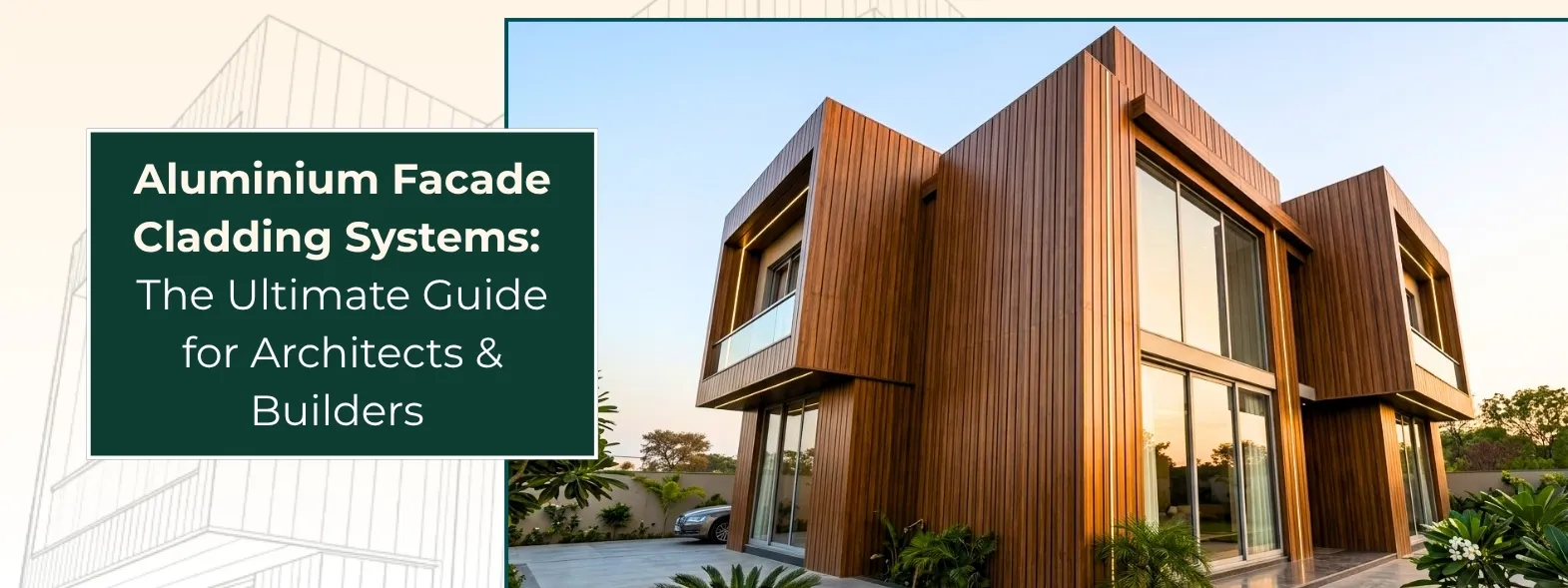
In contemporary architecture, the façade has evolved from a purely visual element into a high-performance building system. It plays a critical role in regulating environmental exposure, enhancing energy efficiency, and defining architectural identity.
Across India’s urban developments, from commercial hubs to institutional campuses, aluminium facade cladding has emerged as a preferred solution. Its combination of lightweight properties, fabrication precision, and adaptability makes it particularly suitable for modern construction.
As expectations around durability, safety, and performance increase, architects are moving beyond material selection toward integrated aluminium facade systems that can deliver consistent results over time.
What Are Aluminium Facade Cladding Systems?
Aluminium facade cladding systems are engineered exterior assemblies that combine aluminium facade panels, structural subframes, and fixing components to create a protective building envelope.
A typical system includes:
- Aluminium panels for facades
- Substructures using extruded aluminium profiles
- Mechanical fixing or cassette systems
- Joint sealants and weatherproofing layers
Unlike traditional cladding, these systems are designed as multi-layer assemblies, where performance depends on how each component works together.
Advanced solutions such as Metaskin by Luxewood India follow this system-based approach, integrating panel design, substructure, and installation methodology into a coordinated solution.
Why Aluminium Facade Systems Are Widely Used
The growing use of aluminium facade systems is driven by their ability to meet both design and performance requirements.
Performance Characteristics
- Resistant to UV exposure, rain, and atmospheric pollutants
- Naturally corrosion-resistant due to protective oxide layer
- Capable of maintaining structural integrity over long periods when properly specified
Design Flexibility
- Supports clean, modular façade articulation
- Available in a wide range of finishes and textures
- Adaptable to both simple and complex geometries
Construction Efficiency
- Lightweight material reduces structural load
- Compatible with prefabrication and faster installation methods
Aluminium facade panels, aluminium facade systems, and aluminium facade cladding are widely used in modern construction due to their balance of durability, design flexibility, and performance.
Types of Aluminium Facade Systems
The selection of a façade system depends on building type, environmental conditions, and design intent.
Aluminium Composite Panel (ACP) Systems
ACP systems consist of aluminium sheets bonded to a core material. They are widely used for cost-sensitive and low to mid-rise applications. However, performance characteristics, especially fire behavior, depend on the type of core material used and overall system design.
Solid Aluminium Panel Systems
Solid aluminium panels are non-combustible and provide higher structural strength. They are typically specified for high-rise buildings, institutional projects, and environments with higher exposure to moisture or corrosion.
Perforated Aluminium Facades
Perforated aluminium panels enable control over light, airflow, and visual transparency. They are often used as secondary skins, shading devices, or feature elements in façade design.
Integrated Aluminium Facade Systems
Modern projects increasingly adopt integrated aluminium facade systems.
Systems like Metaskin combine:
- Engineered aluminium facade panels
- Substructures based on extruded aluminium profiles
- Coordinated installation methods
This approach helps improve alignment, detailing consistency, and overall façade performance, particularly in large-scale or design-intensive projects.
Installation Methods: From Design to Execution
The performance of an aluminium façade depends significantly on installation quality and detailing.
Stick System
Panels and framework are assembled on-site. This method allows flexibility but requires careful supervision and skilled execution.
Unitized System
Prefabricated units are installed on-site, offering better quality control and faster installation, especially in high-rise construction.
Cassette System
Panels are folded into cassette forms and mounted onto a framework, enabling clean finishes and concealed fixings.
System-Based Installation
Integrated systems such as Metaskin follow predefined installation protocols, which help reduce variability and improve consistency in alignment, sealing, and overall performance.
Design Considerations for Architects
When specifying an aluminium facade, several technical and design factors must be considered.
Climate Response
India’s climatic diversity requires façade systems that can handle heat, humidity, rainfall, and pollution. Material selection and detailing should reflect local environmental conditions.
Material Expression
Aluminium offers a wide range of finishes, enabling architects to achieve varied visual outcomes without compromising performance.
Structural Integration
Substructures using extruded aluminium profiles provide strength, dimensional accuracy, and compatibility with complex façade geometries.
Detailing & Joints
Joint design, thermal expansion allowances, and drainage detailing are critical to ensure long-term performance and prevent water ingress.
Fire Performance
Fire performance in aluminium facade systems depends on the complete façade assembly, including panel core material, insulation, and installation detailing. Compliance with applicable fire safety standards should be verified during specification.
Sustainability
Aluminium is fully recyclable and can contribute to sustainable building strategies when combined with energy-efficient façade design.
When Should You Use Aluminium Facade Systems?
Aluminium facade systems are suitable for:
- Commercial and high-rise buildings
- Projects in coastal or high-pollution environments
- Designs requiring precise detailing or complex geometries
- Developments prioritizing durability and reduced maintenance
For projects with higher performance expectations, integrated systems may offer better control over execution and long-term outcomes.
Choosing the Right Aluminium Facade Suppliers
Selecting the right partner is critical to achieving desired façade performance.
When evaluating aluminium facade suppliers, consider:
- Experience with similar project types
- Ability to provide system-based solutions
- Technical design and detailing support
- Installation expertise and quality control processes
Companies such as Luxewood India provide system-oriented solutions that combine material supply with engineering and installation support.
Case Insight: Aluminium Facades in Practice
Recent commercial and institutional projects across India demonstrate the effectiveness of aluminium facade systems in real-world conditions.
Well-executed systems have shown:
- Consistent panel alignment across large elevations
- Improved resistance to environmental exposure
- Reduced maintenance frequency compared to traditional materials
These outcomes highlight the importance of proper system selection, detailing, and installation in achieving long-term façade performance.
What Is the Best Aluminium Facade System in India?
The most suitable aluminium facade system depends on project-specific requirements such as building type, location, and performance expectations.
ACP systems are commonly used for standard applications, while solid aluminium panels are preferred for higher safety and durability requirements. Integrated systems such as Metaskin are designed for projects where coordinated engineering, detailing precision, and long-term performance are priorities.
Rather than a one-size-fits-all solution, the selection should be based on technical evaluation and project needs.
Key Takeaways for Architects & Builders
- Aluminium facade panels enable lightweight and adaptable building envelopes
- Aluminium facade systems improve durability when properly specified and installed
- Extruded aluminium profiles support structural precision and design flexibility
- Integrated systems can improve consistency and reduce execution variability
- Supplier expertise plays a critical role in façade performance
About Luxewood India
Luxewood India is among established aluminium facade suppliers offering engineered aluminium facade systems for modern construction. Its Metaskin system integrates aluminium facade panels with coordinated substructures and installation methodologies, supporting consistent execution across diverse architectural applications.
Conclusion
Aluminium facade cladding systems have become an integral part of modern architecture in India. Their effectiveness lies not just in the material itself, but in how well the entire system is designed, specified, and executed.
For architects and builders, the focus should be on system performance, detailing accuracy, and long-term reliability, ensuring that the façade continues to perform as intended throughout the building’s lifecycle.
Because ultimately, a façade is not just a visual element, it is a critical component of building performance.
FAQs
Are aluminium facade panels expensive?
Costs vary depending on system type and specification. While initial costs may differ, lifecycle performance and maintenance should be considered.
Which aluminium facade is suitable for high-rise buildings?
Solid aluminium panels or properly specified integrated systems are generally preferred due to their structural and fire performance.
Do aluminium facades require maintenance?
Aluminium facades are relatively low maintenance, but periodic cleaning and inspection are recommended to maintain performance.
Can aluminium facades be customized?
Yes, aluminium supports a wide range of finishes, colors, and fabrication techniques, allowing for flexible design solutions.